Rashid Chirenje
WHEN a young person becomes addicted to alcohol or drugs, attention naturally turns to them: the detox they may need, the rehabilitation options, the dangers of the streets and the risk of arrest.
But amid the crisis, one question often goes unanswered: who is looking after the parents?
Behind every young person struggling with addiction is a mother, father, grandparent or guardian who is also in distress.
They often suffer in silence.
In Zimbabwe, this is a growing reality, local reports describe crystal meth, known on the streets as mutoriro, guka or dombo, driving a public health crisis, alongside codeine cough syrups such as Broncleer.
Marijuana ‘Mbanje’ and alcohol remain part of the picture amongst the dangerous substances that are affecting the young.
For many parents, the early signs bring confusion at times denial, followed by fear, anger, shame and exhaustion.
They ask themselves what they did wrong, whether they should have noticed sooner, and what will happen to their child if the worst occurs.
These emotions are usually carried privately, because parents are expected to stay strong and keep the household going.
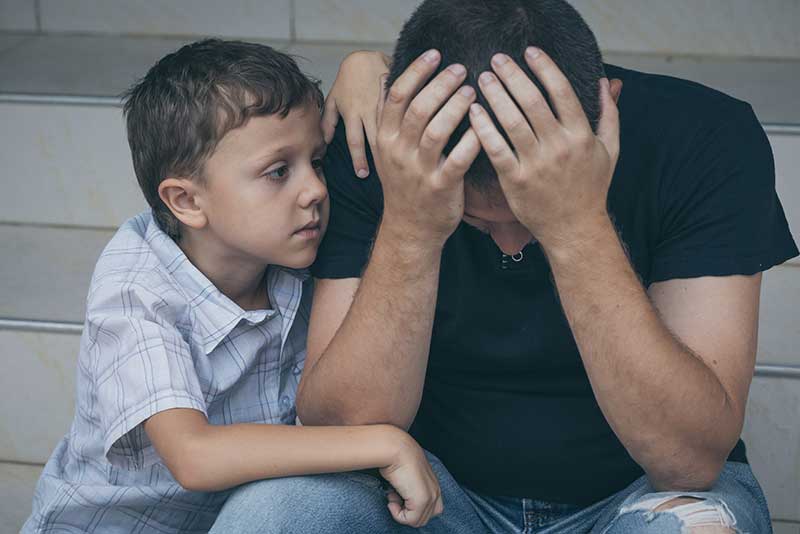
Addiction can reshape the emotional, social and financial life of an entire family. Reports from affected homes describe money meant for food being taken to buy drugs, household items disappearing and constant arguments.
Some families reach breaking point.
Tshe Harare civil court has seen a rising number of parents seeking protection orders against children aged 18 to 35, citing drug abuse and violent behaviour.
Behind each application is a parent who never wanted to take that step.
Researchers have long argued that families are overlooked. Orford et al. (2013) described the harm addiction causes to family members as a major but neglected contributor to ill-health worldwide, while Copello et al. (2010) documented the stress and health problems experienced by relatives.
Many parents also carry guilt. They replay school fees they could not pay, years spent working away from home, a divorce or a move. Most conclude, wrongly, that they caused the problem.
Local experts point to a different picture: peer pressure, family breakdown, limited knowledge of the effects of drugs, stress and, for many young people, an escape from hardship.
With youth unemployment devastatingly high, hopelessness is a powerful force. A single parenting decision is rarely the cause.
Then there is the silence. Addiction is still whispered about at funerals and church gatherings, and parents withdraw from the very people who could support them.
There is also a practical fear. Because drug use is criminalised, young people may find it hard to seek help, and parents may worry that reaching out will lead to police involvement.
How often does anyone ask a father how he is sleeping? How often does someone ask a mother when she last had a day that was not about the crisis?
Many parents have not been asked.
This is where counselling becomes essential.
Counselling offers parents a safe and confidential space to express anger, fear and grief, to challenge unnecessary self-blame, and to understand addiction as a complex health condition rather than a simple moral failure.
It also equips them with practical skills: setting boundaries they can keep, speaking with concern instead of accusation, and responding to relapse without despair.
One of the hardest lessons is the difference between supporting a child and enabling an addiction. Paying a debt “just this once” or covering for a missed day can come from deep love, yet it can shield a young person from consequences that might prompt change.
A mother can love her child fiercely and still feel exhausted. A father can refuse to give money and still lie awake with worry. Seeking help should not be seen as weakness. It is part of staying well enough to support someone else.
Zimbabwe already has a model worth building on: The Friendship Bench.
Developed in Harare, trains community health workers to offer talking therapy at primary care clinics.
Chibanda (2017) described it as a task-shifting approach aimed at narrowing the treatment gap for mental, neurological and substance use disorders, and a randomised trial in Harare (Chibanda et al., 2016) found it reduced symptoms of common mental disorders.
Support does not always begin in a hospital. Sometimes it begins with someone willing to listen.
Fathers should not be forgotten. Cultural expectations often discourage men from admitting fear or seeking help, and grandparents and other relatives who raise children also carry heavy burdens.
Counselling should be open to the whole family, and healthcare workers, teachers, church leaders and social workers all have a role in pointing families towards it without judgement.
Government has adopted the Zimbabwe Multi-Sectoral Drug and Substance Abuse Plan 2024-2030, covering prevention, treatment and harm reduction.
Yet reports note that rehabilitation facilities remain few and expensive, which makes community-based support for families even more important.
Parents can begin by speaking to a family doctor, a clinic nurse, a school counsellor or a trusted community leader.
Organisations such as the Zimbabwe Civil Liberties and Drug Network and Teen Rescue Mission offer counselling and rehabilitation support.
The 393 helpline run by Youth Advocates also covers substance abuse and answers in Shona, Ndebele and English.
Treatment for the young person and support for the parent should complement each other. A parent who is heard is better able to stay calm, hold boundaries and keep the door to recovery open.
Behind the statistics is a mother who may be lying awake, listening for the gate.
Behind the statistics is a father who may be struggling in silence.
Behind the statistics is a family learning to hope again.
Let us help the young person recover, listen to the parent and strengthen the home.
Because when we care for the caregiver, we also strengthen the road to recovery.
Rashid Chirenje is a Counselling Psychology Student, studying for his Msc in Counselling Psychology with the Great Zimbabwe University. He writes in his own capacity, for feedback you can contact him on rashydchirenje@gmail.com